
Strength, Longevity & Performance After 40
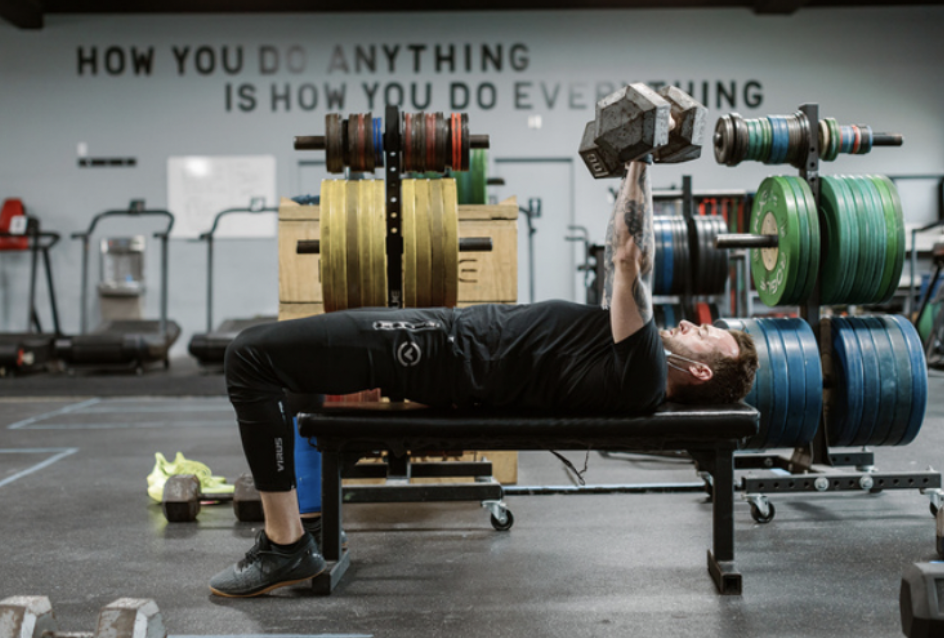
You built a body that could handle anything. Early mornings, heavy sessions, no excuses. That's not the part that's changing.
What's changing is the cost. The same training that used to bounce off you now leaves a mark. You're not weaker; you're carrying more: a business, a family, a decade of miles on the joints, a nervous system that's managing a lot more than a workout. And somewhere along the way, you got sold a false choice: slow down and stay healthy, or keep pushing and pay for it.
That's not the real trade-off. The real shift isn't about doing less. It's about training with enough precision that every session actually earns its keep; instead of just adding to a pile of fatigue you never fully climb out of.
This is the difference between training hard and training smart, and after 40, it's the entire game.
The Real Problem Isn't Age
Most high performers don't get beat up by training. They get beat up by undifferentiated training; the same intensity, the same volume, the same exercise selection they used a decade ago, applied to a body with a decade less recovery capacity and a decade more life stress sitting on top of it.
At 25, you could out-train a bad program. Recovery covered your mistakes. At 40+, recovery is a finite resource, and every imprecise decision; too much volume, the wrong exercise, ignoring a fatigue signal; draws directly from the same account you need for performance.
The good news: this isn't a ceiling. It's a training problem, and training problems have solutions.
Intensity and Volume: Stop Treating Them as the Same Lever
Most lifters manage one dial, effort. Go hard or don't. But intensity (how heavy, how close to failure) and volume (how much total work) are two separate levers, and after 40 they need to be managed independently, not maxed out together.
High intensity with high volume is how you build elite fitness in your 20s. It's also how you burn through recovery capacity in your 40s faster than you can rebuild it. The fix isn't lowering the ceiling on effort — it's being deliberate about when you spend it.
Push genuinely hard on the lifts and sessions that matter most to your goals.
Pull volume back on everything else so the hard efforts can actually be recovered from.
Use effort-based tools (RPE, velocity, how the bar actually feels that day) instead of a spreadsheet number that doesn't know what kind of week you've had.
This is autoregulation, and it's not a concession; it's how people who train for decades keep training for decades.
Exercise Selection:
The lift itself is not the goal. The adaptation is the goal. That distinction matters more every year.
A lot of the wear and tear high performers carry isn't from training hard — it's from training a movement pattern that's fighting their joints just to chase a number or a familiar exercise. Smart exercise selection means asking a different question: what's the lowest-cost way to get this stimulus?
Swap the movement, not the intensity. A trap-bar deadlift or a safety-squat-bar squat can deliver the same strength stimulus as a straight bar with a fraction of the joint tax, if that's what your body is telling you it needs.
Train the qualities that keep you dangerous long-term; grip strength, hip hinge patterns, single-leg stability, rotational control, the ability to get up off the ground without using your hands. These aren't "old guy exercises." They're the foundation everything else sits on.
Keep the lifts that are working. Change the ones that are costing you more than they're giving back.
This isn't training less aggressively. It's aiming the aggression somewhere it can actually be absorbed.
Fatigue Management
Here's the part almost nobody teaches high performers: fatigue is data, not weakness. The lingering soreness, the flat motivation, the sleep that's off, the bar speed that's suddenly slower; that's your body reporting on the account balance. Overriding it isn't toughness. It's how a 35-year-old and a 55-year-old end up with the same injury, except one of them recovers from it in a fraction of the time.
Managing fatigue well means building the habit of checking in before you decide how hard to push:
Track something objective — resting heart rate, grip strength, how the first warm-up set feels — so you're not relying on willpower to read your own state.
Build real deload weeks into the calendar, on purpose, before you're forced into one by an injury.
Separate "I don't feel like it" from "my body is actually asking for less." They're not the same signal, and learning to tell them apart is a skill, not a feeling.
This is what lets you keep training with intent for the next twenty years instead of riding a boom-and-bust cycle of hard training, breakdown, and starting over.
Recovery Is Part of It
If you're only counting the work in the gym, you're only seeing half the program. Sleep, protein intake, walking, mobility work, stress management; these aren't optional extras for people who have time. They're the mechanism that turns training into adaptation. Skip them, and the hardest session in the world just becomes more debt.
Program recovery with the same seriousness you program your training. Not "if there's time" — scheduled, tracked, non-negotiable.
Train With Intent
None of this is about doing less. It's about making sure every rep, every session, and every week is actually building something instead of just costing you something.
Strength, longevity, and performance after 40 aren't in conflict. They're built the same way they always were; through hard, honest training. The only thing that changes is precision: the right intensity, the right volume, the right exercise for the job, and the discipline to respect fatigue before it forces the issue.
You don't have to slow down. You have to get sharper about where the effort goes.
That's the standard at Conquer Athlete. Train hard. Train smart. Keep going.
Explore our Conquer Athlete Individual Design Coaching Program HERE if you’re ready to level-up.