
By Conquer Head Coach & CEO Jason Leydon, CSCS
The closer you get to competition, the more your training needs to reflect the demands of the sport. But that doesn't mean doing more. It means being more intentional with what you're doing.
When we start approaching that 16-week window before a primary competition, there needs to be a shift in how we approach training.
The general preparatory work we've spent months developing should have created a foundation of strength, power, aerobic capacity, and movement efficiency. Now we need to start figuring out how to express those qualities when fatigue becomes a factor.
And this is where I think a lot of athletes and coaches make mistakes.
Building Fatigue Tolerance Without Burying the Athlete
As we move into an intensification phase, we need to systematically introduce more fatigue-producing work and increase exposure to the demands of the sport under fatigue.
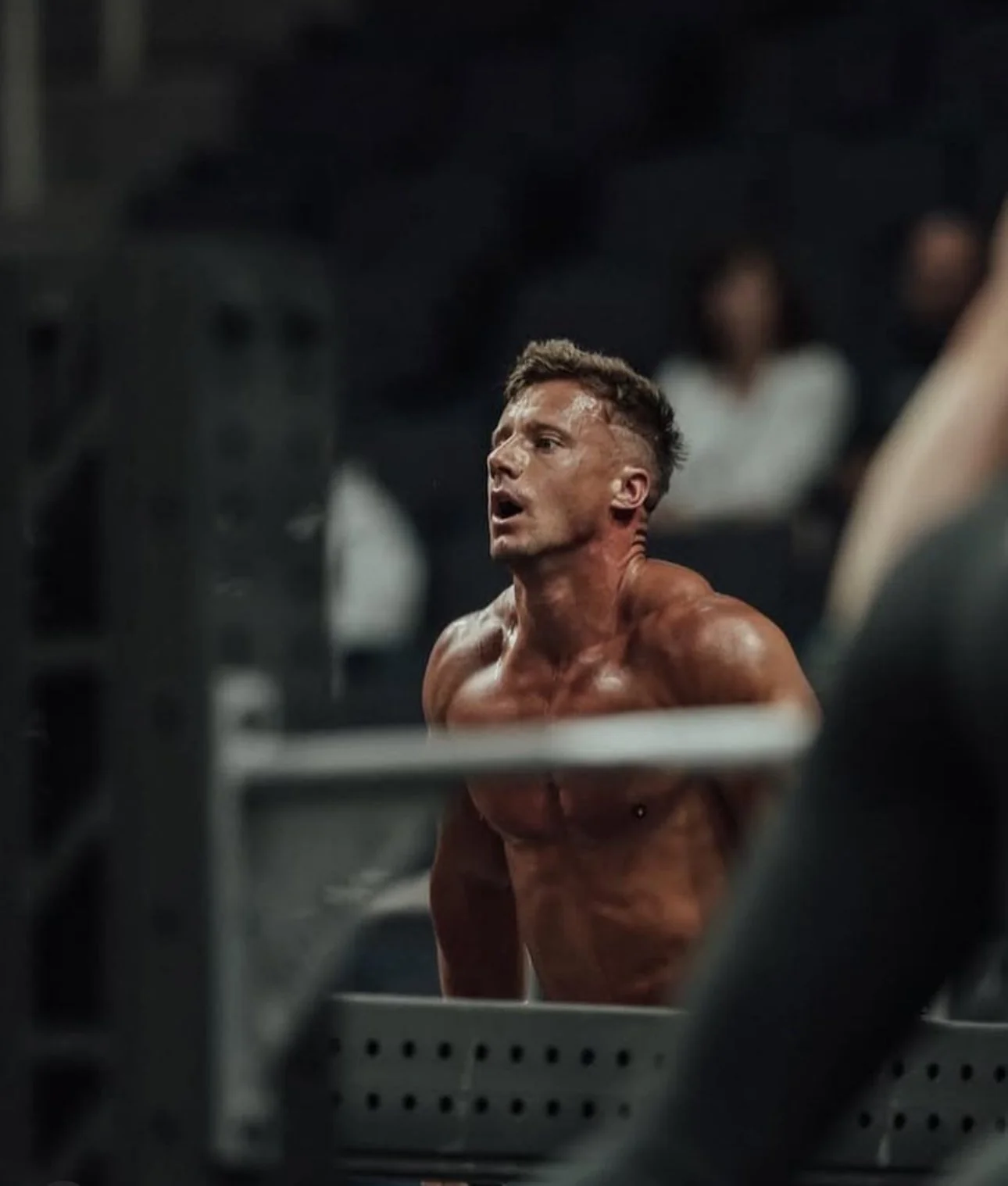
For a competitive CrossFit athlete, this could mean performing high-skill gymnastics under elevated heart rates, maintaining barbell efficiency after significant cyclical work, or developing the ability to repeat high-power efforts with incomplete recovery.
But there's an important distinction between training an athlete to perform under fatigue and simply making an athlete tired.
Anyone can write a workout that buries someone.
The challenge is creating enough stress to force an adaptation while still allowing the athlete to recover, absorb that work, and come back prepared for the next session.
We need to be intentional about the amount of fatigue we're introducing, how frequently we're introducing it, and whether the athlete is actually improving their ability to perform within those conditions.
Maintaining What We've Already Built
Another important consideration during this phase is understanding what physical qualities need to be developed and which ones simply need to be maintained.
We've spent considerable time building strength and power. That doesn't mean we need to continue pushing those qualities with the same volume we used during earlier training phases.
Research on minimum effective training doses suggests that strength can be maintained with substantially less volume, provided sufficient intensity is preserved. However, the exact requirements depend on the athlete's training history and the demands of the sport.
This gives us an opportunity.
We can reduce unnecessary strength volume, maintain exposure to meaningful loads and explosive movements, and free up recovery resources for the more sport-specific work we're introducing.
The goal isn't to stop training strength and power. It's to maintain those qualities without allowing that work to interfere with our primary objective.
Managing Fatigue Is Part of the Process
As competition approaches, we need to become increasingly aware of the relationship between training stress, adaptation, and recovery.
More volume isn't always better. More intensity isn't always better. And being exhausted at the end of every session doesn't necessarily mean we're moving closer to our goals.
We need to look at movement quality, repeatability, output, recovery between sessions, and how the athlete is responding over time.
Some sessions should challenge the athlete's ability to execute under significant fatigue. Other sessions should allow them to express strength, speed, and skill with minimal fatigue.
Both have a purpose.
The Goal Is Performance, Not Fatigue
Ultimately, the preparatory phase should be about taking the physical qualities we've developed and teaching the athlete how to use them when it matters most.
We aren't trying to prove how much work an athlete can survive.
We're trying to build an athlete who can consistently express their abilities when the demands of competition are at their highest.
The best preparation isn't about how much fatigue you can create. It's about how much performance you can preserve when fatigue shows up.
That's the difference between simply training hard and preparing to compete.
Ready to experience a different level of coaching?
Learn more about Conquer Athlete's One-on-One Individual Design Coaching and discover what it means to have a program—and a coach—truly invested in your progress.
Explore our Conquer Athlete Individual Design Coaching Program HERE if you’re ready to level-up.